






Pigeons
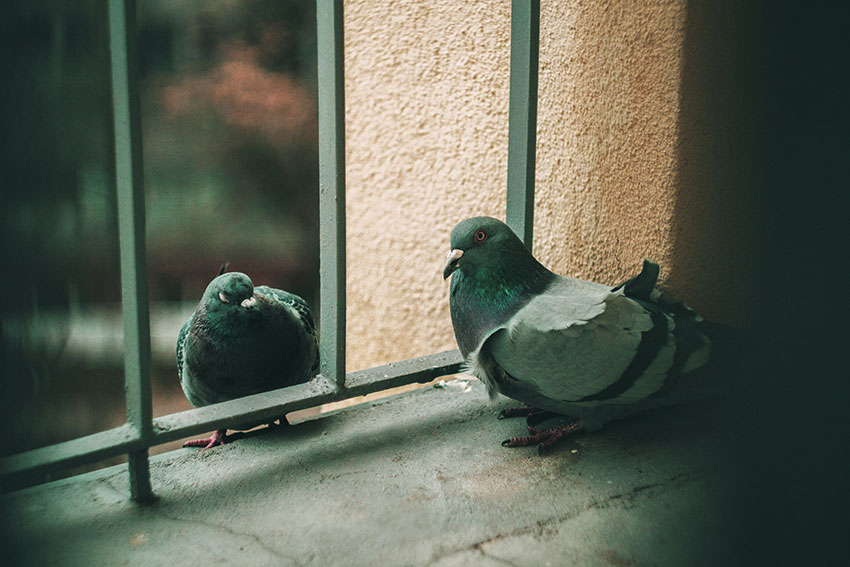
The feral pigeon is found throughout Britain
Many people associate this bird with urban environments and as such are sometimes called the ‘town pigeon’.
However, they are often found in rural situations such as on farms.
These birds are descended from rock doves which explain why they often nest on buildings and other structures, usually on ledges, under eaves or on girders.
Nests are constructed of grass and twigs but can also contain rubbish which has pieces of plastic.
The feral breeding population is boosted by racing pigeons or escaped birds from domestic lofts. The peak breeding season is between March and July, but feral pigeons can breed all year sales. The brood usually of two off-white eggs laid on consecutive days. Incubation lasts for about 18 days and the hatched chicks are fledged after about 30 days.
Birds such as Pigeons carry a variety of diseases such as Ornithosis, Listeria and E-coli that can be transmitted to man not only from the droppings but also the birds themselves. When dry, pigeon droppings can become airborne in small particles, which can lead to respiratory complaints such as psittacosis.
Pigeon droppings are acidic and can corrode/erode metals, stonework and brickwork. Nesting materials birds use can block chimneys, flues and guttering, causing possible issues with carbon monoxide and damage to buildings as water overflows from blocked gutters.
Our Pigeons pest control products are 100% tested. If you are in need of local Pigeons pest control, then you can contact us. We provide one of the best domestic and commercial pest control services in your location.
Book appointment
If you have a problem with pests in the London and surrounding area, look no further than Pest-Tec to remove your unwanted visitors. Call us today!
Further Information
Pest Prevention
Pest Removal